
Winner of the 2018 BWBR Studio Prize
Manhattan, New York
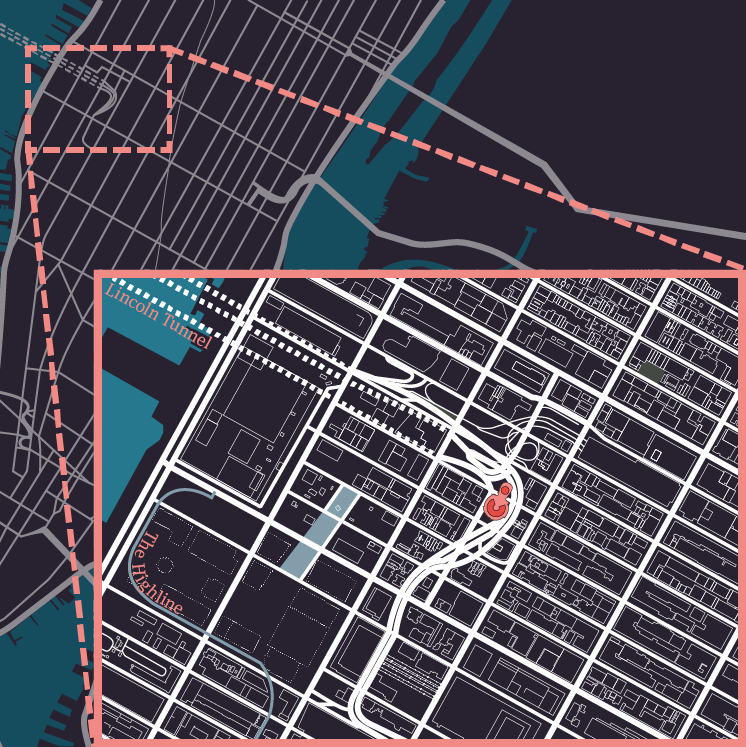
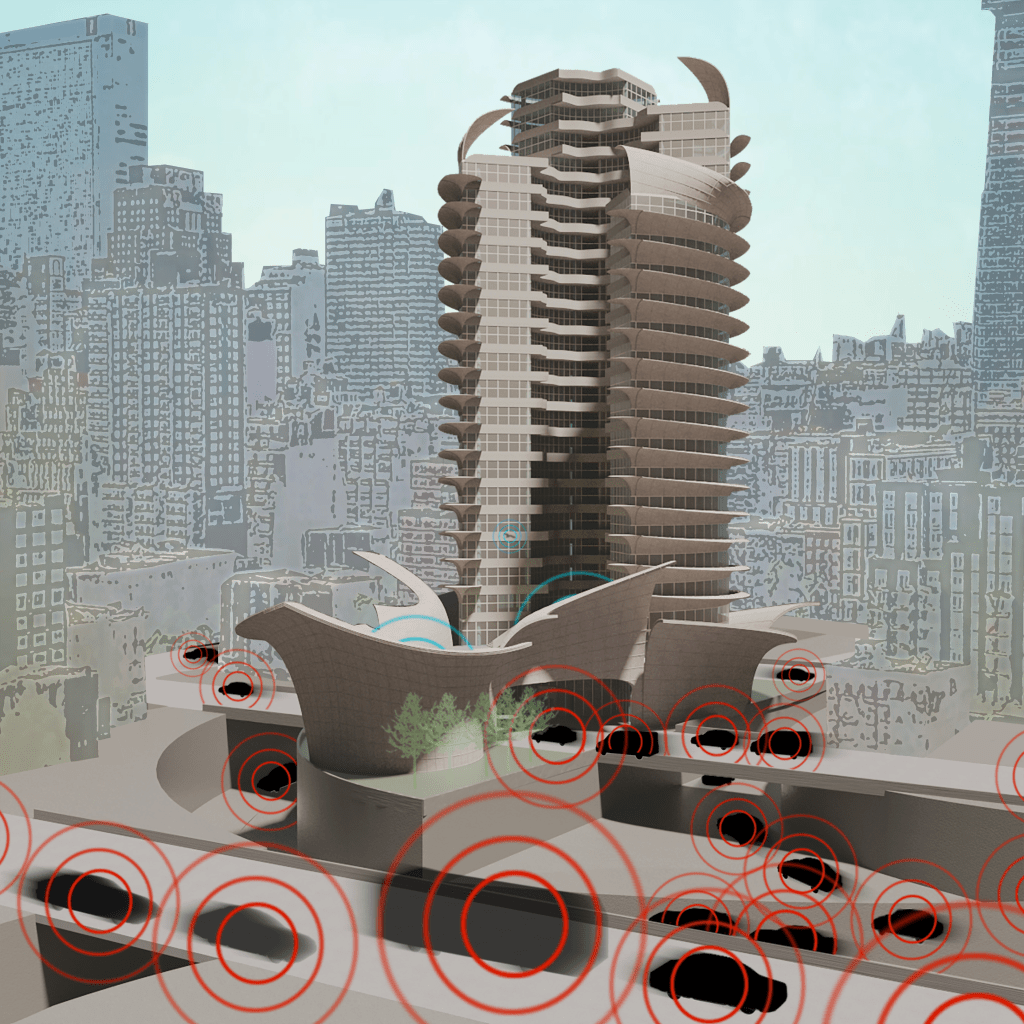
The Audioasis’s driving force comes from New York City’s lack of an acoustically pleasant spot, free of the noise of urban life. Our site, at the New York side of the Lincoln Tunnel, experiences a significant amount of undesirable traffic noise. To combat this noise, our project employs several different strategies.
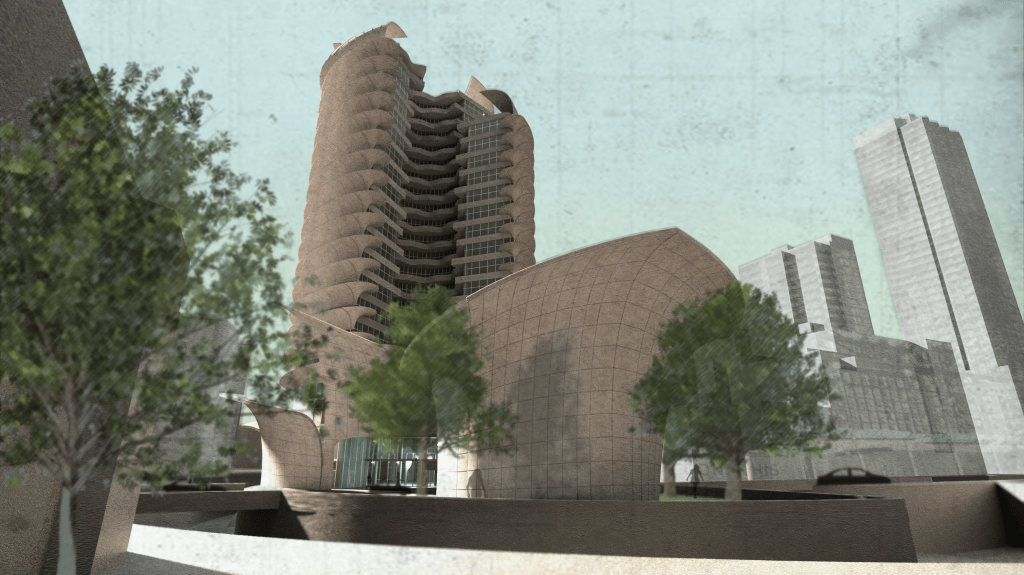
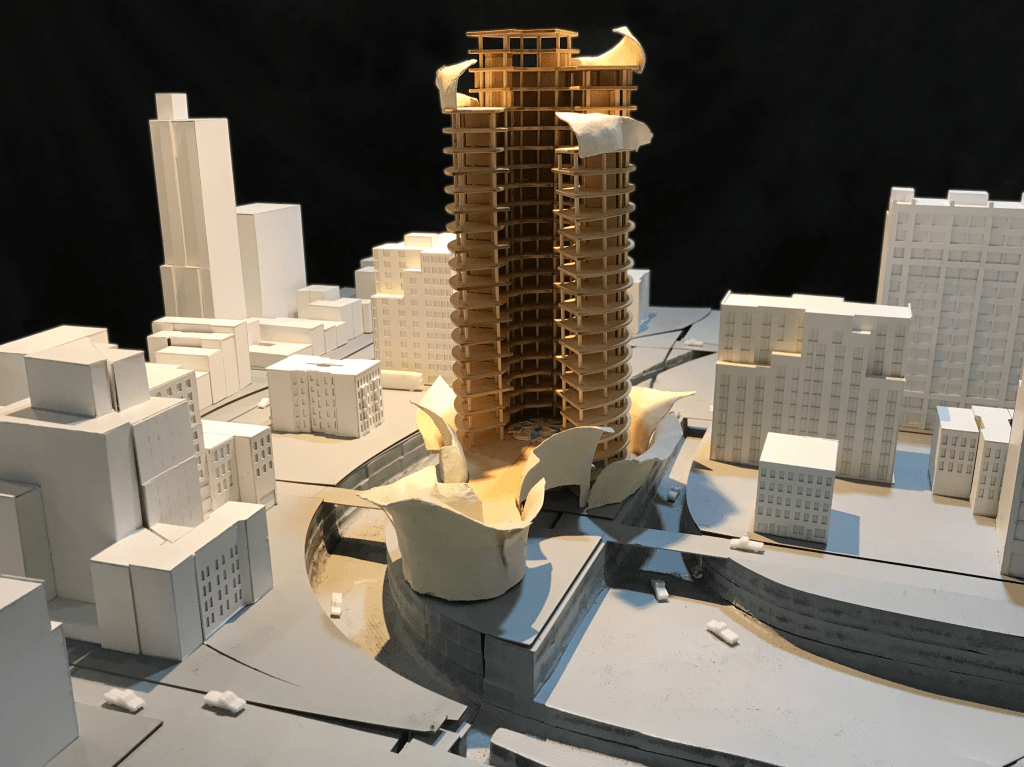
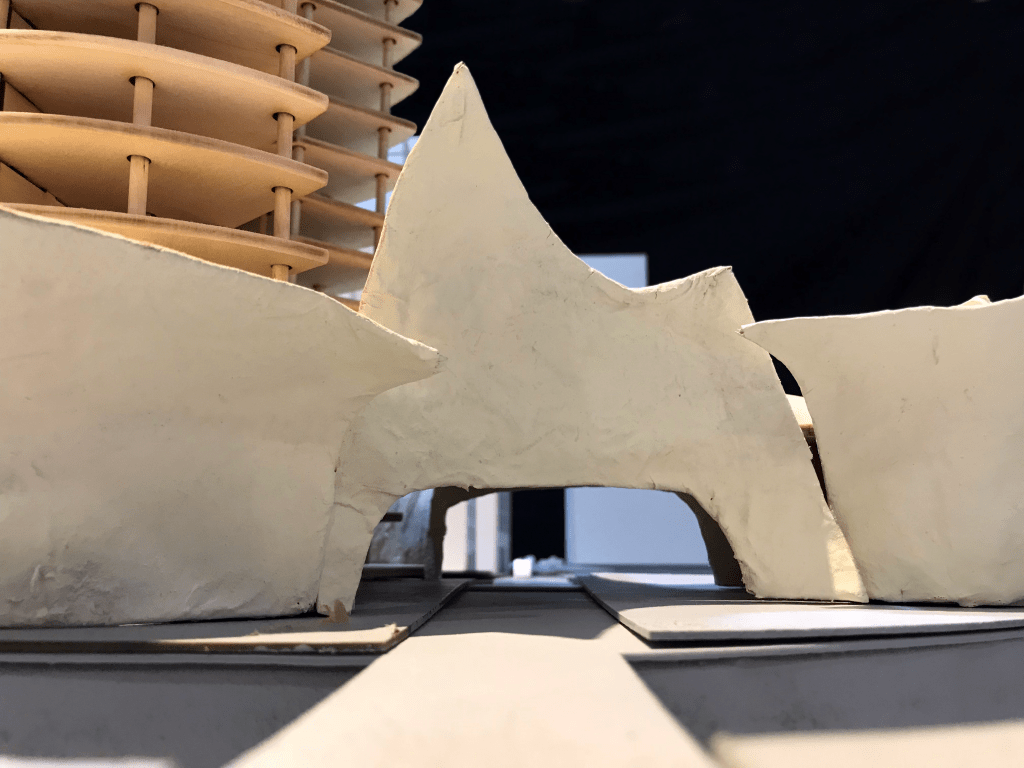
The main feature includes large, concrete forms we referred to as wings surrounding the building to deflect traffic noise back out at the cars in the tunnel and keep it away from the Audioasis. Smaller wings on each apartment level also contribute to the deflection of sound.
Right: A view of the Audioasis showing the concrete wings which deflect traffic noise
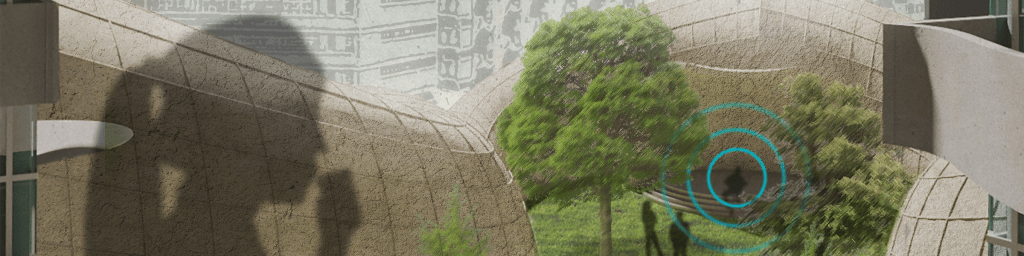
In the center of the building, a green space engulfs its residents in acoustically pleasing sounds of a water fountain and birds, a natural paradise as opposed to the city’s cacophony of horns, sirens, and people. The Audioasis truly is an acoustic retreat.
Right: A view of the central green space from an apartment balcony

plans and Sections
Throughout the course of the project, we attempted to prioritize acoustics with every decision we made. In order to do so, we often found ourselves researching acoustical details we had never considered for other projects or consulting experts both within and without ISU’s School of Design.
One of the very first decisions we made was to attempt to acoustically isolate each apartment from its neighbors. To accomplish this, we determined that the walls and floors dividing each unit would have to be considerably thicker than in an average apartment building.
sections
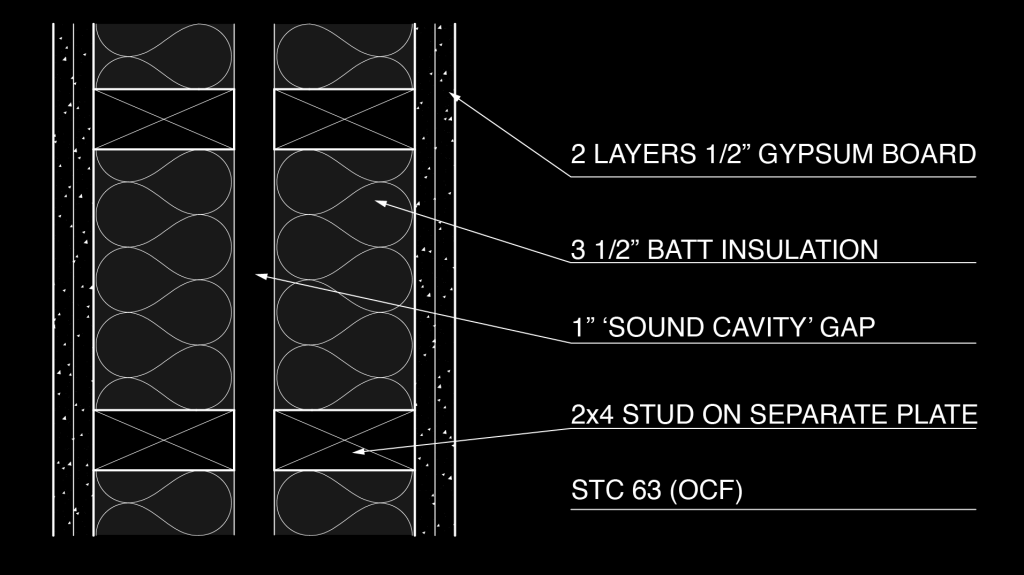
Typical wall section between apartments
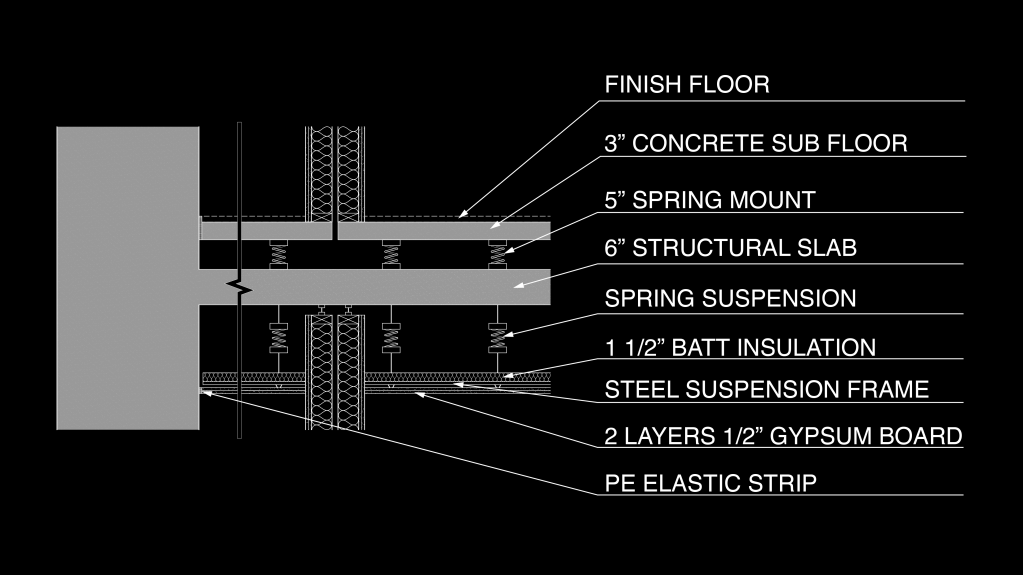
Typical floor section
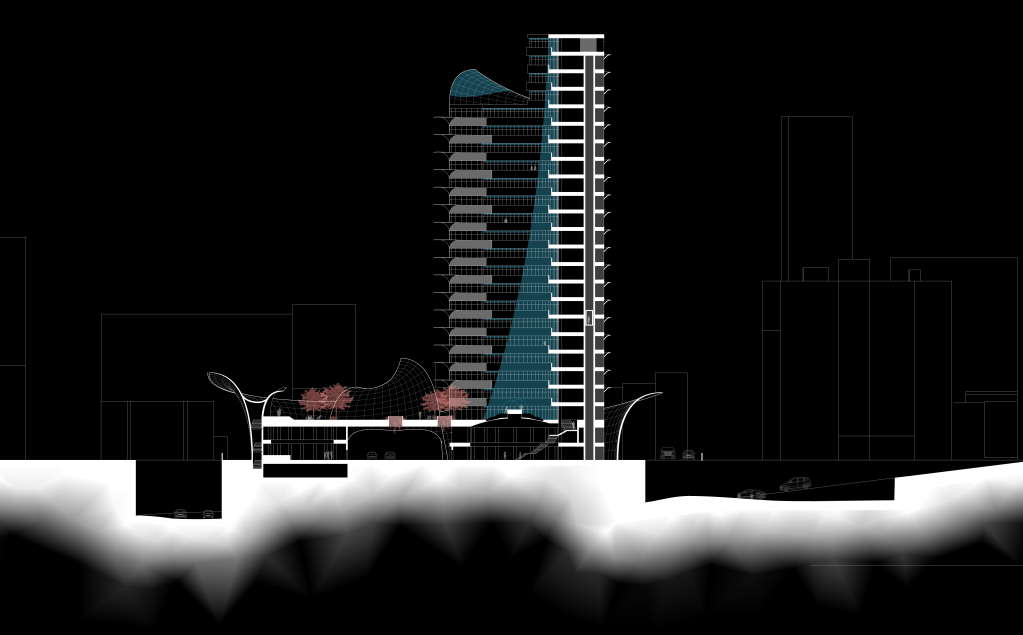
Full longitudinal section of the Audioasis
Plans
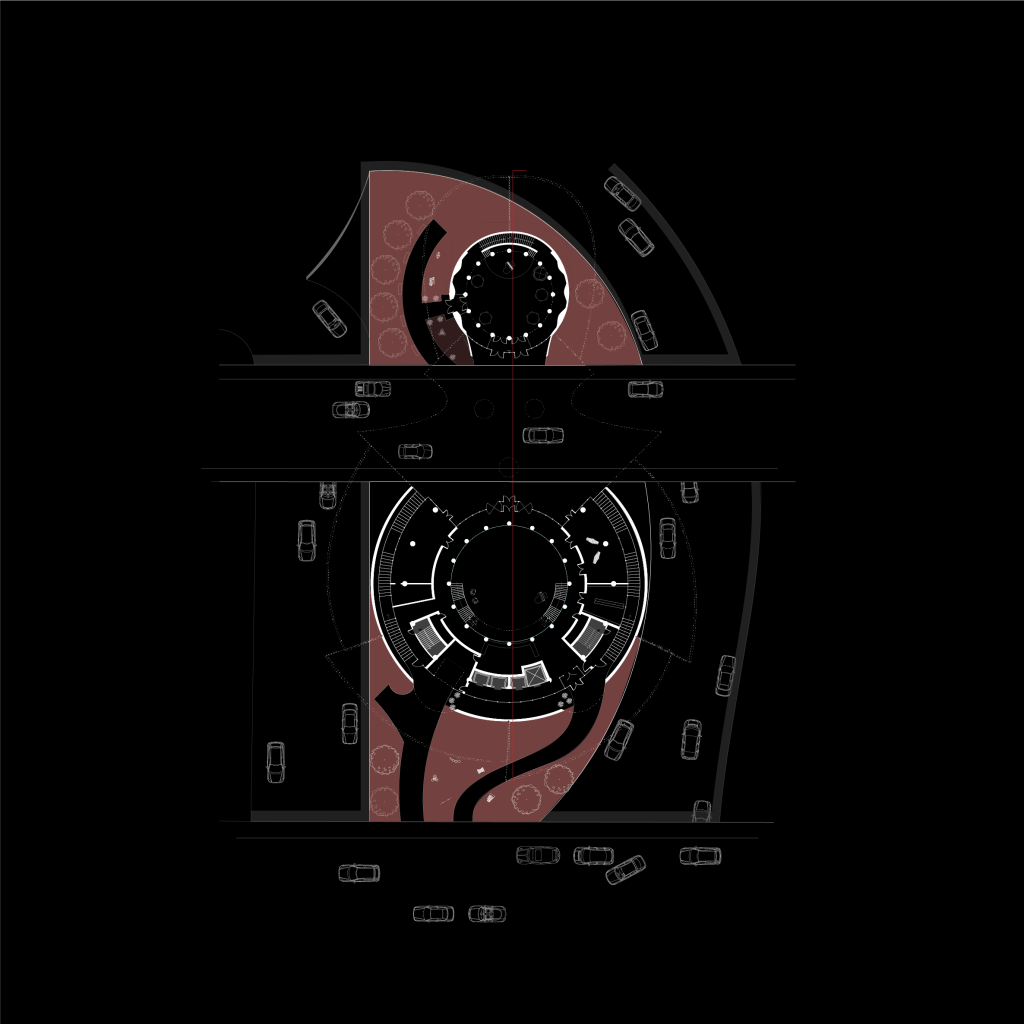
Ground Level

Park Level
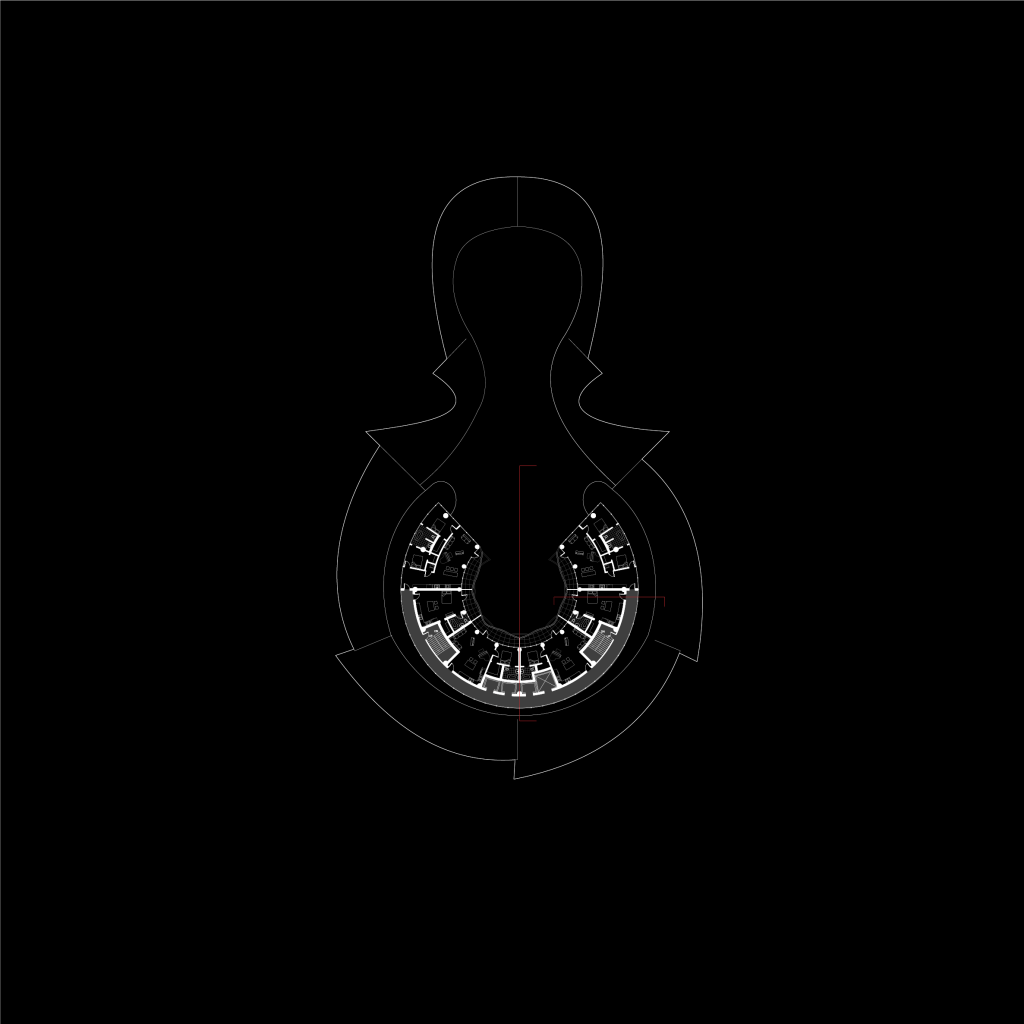
Apartment Levels
The circular plan of the Audioasis created issues even as it solved them. Acoustic issues, such as the strange effects caused by perfect circles, had to be resolved through measures such as undulating balconies. More practical issues, such as interior layouts, were resolved using a radial grid which allowed individual elements to be easily moved around on the floor plate as we tested different designs.
model
 MaryCate Azelborn
Leave a comment